Home Home

Home

  • Overview of Key Issues in the Pre-Election Period for the June 18, 2022 Ekiti State Governorship Election (Pre-Election Press Statement)

    Overview of Key Issues in the Pre-Election Period for the June 18, 2022 Ekiti State Governorship Election (Pre-Election Press Statement)

    T
    he first of two off cycle governorship elections for 2022 will be conducted by the Independent National Electoral Commission (INEC) in Ekiti State, on June 18, 2022. The election is the seventh in the state since the return of the current democratic dispensation in 1999. Following a 2010 Court of Appeal verdict, which removed then Governor Segun Oni, and declared Dr. Kayode Fayemi the rightful winner of the 2007 governorship election, Ekiti became one of several states holding off cycle governorship elections. The June 18, 2022 Ekiti State gubernatorial election is the very first to be conducted under the amended Electoral Act, 2022.

    As voters in Ekiti State head to the polls for tomorrow’s governorship election, the contest is apparently shaping up to be a three horse race involving the ruling party in the state, the All Progressives Congress (APC), the opposition Peoples Democratic Party (PDP) and the Social Democratic Party (SDP), which has clearly emerged as a third force in the election. CDD observes that there are 16 political parties fielding candidates for the election. Only two candidates and seven deputy governorship candidates are women, just as the age range of the candidates indicate low participation of the youth.

    The CDD EAC will be closely observing the electoral process with the objective of collecting data to support evidence-based analysis of key aspects of the Ekiti State governorship election. The CDD EAC will also host a fake news hub for the purpose of tracking and countering fake news and misinformation as it affects the election.

    Pre-Election Observations

    Based on the observation of the CDD EAC in the pre-election period, the following are the key trends, which have underlined the process.

    CDD notes that the June 18, 2022 Ekiti State Governorship election is significant because it will serve as the first dress rehearsal as the INEC prepares for the 2023 general elections. The election will also be the first to be conducted under the Electoral Act, 2022, and the new INEC guidelines and regulations for conduct of elections. CDD EAC further notes that although INEC has made commitments to conduct a credible election in Ekiti State, its success in this regard would depend on its neutrality, professionalism and the level of its understanding and commitment to the new legal framework. The credibility of the process would also depend on how well INEC uses some of its new powers as derived from the extant electoral law, especially the power conferred on the Commission to delay the release of election results, if the Commission needs to take a second look.

    The CDD EAC is concerned about violence, money politics and violations of incumbency powers and the possible effects of these on the credibility of the election. CDD EAC notes that Ekiti State, has recorded several incidents of violence during previous elections. In the build up to the 2022 governorship election, pockets of election-related violence have been recorded in places like Ado Ekiti, Efon Alaiye, Oye, Ido/Osi and Oye Ekiti. Other observable issues, which would shape the credibility of the election include; how well INEC is able to effectively deploy technology, particularly the Bimodal Voter Accreditation System (BVAS), impartial security provisioning, the quality of results management, curtailing the role of money, incumbency and god fatherism in the election. Also critical is the need for stakeholders in the election to proactively track, and counter fake news and misinformation. Already, the pre-election period has witnessed the spread of fake news capable of undermining voter confidence and participation in the process. An example is the fake news which trended recently on a purported Appeal Court decision nullifying the primaries of one of the major political parties and, by extension, its candidate.

    In terms of some of the election risk factor, CDD notes that the ongoing strike by the Academic Staff Union of Universities ( ASUU) has crippled the local economy especially in university towns in Ekiti State. This has created a threat in terms of the availability of idle youth being recruited for activities, which could undermine the credibility of the election. By grounding the local economy, the strike has also created the wrong incentives as voters are more likely to see the election as an opportunity for economic survival, thereby exacerbating the risk of vote buying. This becomes even more relevant when it is considered that Ekiti State introduced the issue of “stomach infrastructure” into the Nigerian political lexicon. CDD has also observed that based on history of past violence in elections in the state, the following Local Government Areas, constitute potential flash points in the election; Ado Ekiti, Efon Alaiye, Ido/Osi, and Oye.

    Signed:

    Professor Adele Jinadu

    Chair, CDD EAC

  • All we know about FCT status and the 25% threshold for presidential election

    All we know about FCT status and the 25% threshold for presidential election

    Controversies have trailed the recently conducted 2023 general elections in Nigeria. Notable in this category is the debate on the percentage of votes a candidate must garner in the Federal Capital Territory (FCT) before such person can be declared president-elect.

    The issue has gained momentum in the political sphere and has since sparked various interpretations as the Independent National Electoral Commission (INEC) has since issued a certificate of return to Bola Tinubu of the All Progressive Congress (APC), who was declared winner of the February 25 presidential election.

    As days went by, a series of debate emerging from the provisions of section 134 of the Nigerian constitution also gained momentum. The section states that for a candidate to be declared president-elect, he must have a majority of votes cast and 25% of the votes in at least 24 of the 36 states and the Federal Capital Territory. 

    Some experts believe that Tinubu, the president-elect, should not have been declared the winner of the presidential poll as he couldn’t clinch 25% of the total votes cast in the FCT.

    The arguments mostly border on ‘and the FCT’, thus raising the question of whether the FCT is or should be regarded as a state.

    Aggrieved parties have approached the election tribunal to contest the declaration made by the electoral umpire.

    As we await the outcome of the litigation process, CDD Election War Room has compiled a list of things that you should know about the FCT and its status.

    Has any past elected president scored less than 25% in FCT since 1999?

    Nigeria has had seven general elections since its return to democracy in 1999. Before now, there has been no query on the status of the FCT as the past presidents-elect all met the 25% threshold until now.

    Here’s a rundown of the results to date.

    The 1999 elections returned us to civilian rule. The major candidates were Samuel Oluyemi Falae of the Alliance for Democracy (AD) and All People’s Party (APP), and Olusegun Obasanjo of the Peoples Democratic Party (PDP). 

    Obasanjo won the election with a total of 18,738,154 votes (62.8%). Falae, the closest rival, had 11,110,287 votes (37.2%). In the FCT, Obasanjo polled 59,234 votes (59.8%) while Falae polled 39,788 votes (40.2%).

    In 2003, the major candidates were Muhammadu Buhari of the All Nigeria People’s Party (ANPP), Olusegun Obasanjo of the PDP and Odumegwu Ojukwu of the All Progressives Grand Alliance (APGA). 

    Obasanjo, who won the elections, garnered 24,109,157 votes (61.8%), Buhari had 12,495,326 (32.0%) while Ojukwu scored 1,295,655 (03.3%). In the FCT, Obasanjo polled 130,243 (49.9%), Buhari had 99,220 (38.0%) and Ojukwu got 22,481 votes (08.6%).

    In 2007, the major candidates were Umaru Yar’Adua of the ruling PDP, Muhammadu Buhari of the ANPP and Atiku Abubakar of the Action Congress (AC). 

    Yar’Adua won the election with 24,638,063 votes (69.60%), followed by Buhari with 6,t605,299 (18.66%) and Atiku who had 2,637,848 (7.45%) votes. There is no state-by-state data for this election.

    In 2011 the major candidates were Goodluck Jonathan of the PDP and Muhammadu Buhari of the Congress for Progressive Change (CPC).

    Jonathan won with a total of 22,495,187 (58.87%) votes while Buhari polled 12,214,853 (31.97%) votes. In FCT, the PDP had 253,444 (63.66%) votes while the All Progressives Congress (APC) polled 131,576 (33.05%) votes.

    In the 2015 elections, where an incumbent lost the seat to an opposition, the major candidates were Goodluck Jonathan of the PDP and Muhammadu Buhari of the APC.

    APC won the election with a total of 15,424,921 votes while the PDP garnered 12,853,162 votes. The candidates of the two parties got above 25% in the FCT as PDP scored 157,195 (51.24%) and APC had 146,399 (47. 72%) votes.

    In 2019, the two top contenders were Muhammadu Buhari of the APC and Atiku Abubakar of the PDP. Buhari won with a total of 15,191,847 votes (55.60%), while Atiku got 11,262,978 votes (41.22%). In FCT, APC got 152,224 (35.91%) while PDP had 259,997 votes (61.33%).

    The 2023 elections proved distinct with the emergence of a third force. The major candidates were Bola Tinubu of the APC, Atiku Abubakar of the PDP and Peter Obi of the Labour Party (LP). 

    Obi won the FCT with 281,717 votes and was the only candidate to have gotten over 25%. Both Atiku and Tinubu were not able to make 25%.

    What the experts are saying?

    Mike Ozekhome, Senior Advocate of Nigeria (SAN), in a recent article explained the status of the FCT under the provisions of the constitution. 

    He concluded by explaining that as regards the elections, “the FCT is not a State, but should rather be treated as if it were one. Thus, in seeking 25% in 2/3 of ALL THE STATES of the Federation AND the FCT, the Constitution clearly distinguished the FCT as a separate entity or a special territory, wherein the Presidential candidate needed to obtain at least 25% of the total votes cast in the election.

    “The reason for this is not far-fetched, as Abuja is the melting pot which unites all ethnic groups, tribes, religions, backgrounds, and other distinct qualities and characteristics in our plural society.”

    Another SAN, Femi Falana, spoke contrary to Ozekhome. According to Falana, it was not mandatory for a presidential candidate to win the FCT to be declared the winner of the election.

    Falana explained that the law sees the FCT as any of the 36 states in the country. Thus, “It is not compulsory for a presidential candidate to win the FCT.”

    He argued that provided the candidate was able to get the required 25% in the majority of states, he can be declared the winner.

    The FCT

    The then head of the Federal Military Government, Murtala Muhammed in a nationwide broadcast, announced the creation of the FCT on February 3, 1976.

    The broadcast came on the heels of the acceptance of the recommendations of a committee headed by Akinola Aguda, a retired Nigerian jurist and former Chief Justice of Botswana.

    The committee was set up by the Murtala Muhammed-led regime in August 1975, to review the need for a new federal capital city and the suitability of Abuja for that purpose.

    After the designation of Abuja in 1976, Lagos continued to serve as the functional capital city of Nigeria until December 12, 1991, when the office of the President of Nigeria was effectively relocated to Abuja during the regime of Ibrahim Babangida.

    The FCT has since been given the status of the seat of power in line with the provisions of chapter 5 of the 1999 constitution, subsequent to the 1979 order.

    Reason for constitutional contention

    Section 299 of the Constitution states, “The provisions of this Constitution shall apply to the Federal Capital Territory, Abuja as if it were one of the States of the Federation.”

    Although the FCT has some pari-passu with states, it is, however, limited within the constructs of the constitution. 

    Many argue that the limitations have restricted the right to call the FCT an outright state as it has no governor. Although the constitution makes provision for the appointment of a minister from the region, the people of the FCT who are indigenes do not make the choice.

    Another school of thought argues the English construct of the constitution “as if it were”. They attributed this to mean “assume it is but it is not”.

    Based on the petitions before the election tribunal, the Appeal and Supreme Courts will have an opportunity to clearly interpret the status of the FCT in this sort of scenario. Till then, the waiting game continues.

  • CDD Election War Room social media weekly trends analyses 

    CDD Election War Room social media weekly trends analyses 

    The much-anticipated presidential and gubernatorial elections have come and gone. However, the conversation surrounding the election has not phased out and different controversial positions have begun to spurt with people discovering new career paths in politics. Some of the trending ones include:

    The 25% ‘Palava’

    Who knew the Federal Capital Territory (FCT) would be the star of the just-conducted 2023 general elections? The ongoing rhetoric regarding if  25% of FCT votes is required to win a presidential election is still causing an uproar on social media. On Twitter alone, there were over 55,000 tweets of people giving their personal inputs, and also linking it to passing five subjects but failing Mathematics and/or English in WAEC. Such instances were mentioned in this tweet.  

    The genesis of all these controversial positions began when the presidential candidate of the All Progressives Congress (APC), Bola Tinubu, was declared the winner by the Independent National Electoral Commission (INEC) and has since been issued his Certificate of Return without getting 25% in the FCT.

    Now, whether a Presidential candidate must score at least 25% of all the votes cast in the Federal Capital Territory, Abuja (FCT), is the present discourse amongst legal pundits and self-proclaimed ‘legal’ professionals.

    Reduction of fee for guber nomination ticket in LP

    Ahead of the governorship elections coming up later in the year in Bayelsa, Kogi, and Imo states, the Labour Party (LP), is under fire for fixing the price of its expression of interest and nomination forms at N25 million. 

    This news gave way to meaningful conversation and led to this question being asked; How expensive should a presidential/gubernatorial nomination ticket be?

    The news of the Labour Party ticket was one of the trending topics on social media last week, generating a whopping amount of more than 98,000 thousand tweets, most of the tweets against the high cost of the gubernatorial nomination fee. 

    Following the backlash, Julius Abure, National Chairman of LP, announced a reduction in the cost of its nomination fees from N25 million to N15 million.

    He made this known while addressing journalists after a meeting with its elected Senators and House of Representatives members in Abuja. Abure said that the decision was reached after consulting with the party’s national leader and the presidential candidate, Peter Obi.

    PDP suspends National Chairman

    The National Chairman of the Peoples Democratic Party (PDP), Iyorchia Ayu was suspended by the party on March 26, 2023.

    Nigerians took to social media to discuss the dispute between PDP wards and its party chairman. Recall that Ayu was reported to have been suspended on Sunday by the ward executive for alleged anti-party activities, failure to pay his annual subscription fees, and failure to vote during the just-concluded elections.

    Ayu, however, responded on Monday, March 27, 2023,  by asserting that those who had suspended him were uneducated and ignorant of the PDP constitution’s requirements.

    The story took an interesting turn when a High Court in Makurdi, Benue State, issued an interim injunction restraining Iyorchia Ayu from presenting himself as the National Chairman of the Peoples Democratic Party.

    See how Nigerians reacted:

    Interim Government Plot

    On March 29, 2023, the Department of State Services (DSS) announced that it had confirmed political actors’ plans to appoint an interim administration in Nigeria.

    The spokesman for the DSS, Peter Afunanya, said the DSS “considers the plot being pursued by these entrenched interests as not only an aberration but a mischievous way to set aside the constitution and undermine civil rule as well as plunge the country into crisis. The illegality is totally unacceptable in a democracy and to the peace-loving Nigerians.”

    The DSS spokesman added that the plots to impose an interim government are being planned through protests in the country and court orders to block the transition of power to the next government. This was reported by The Guardian

    #Interimgovernment trended with over 50,000 tweets with various narratives across social media. Here are some of the highlighted tweets:

    Tinubu the President-elect

    Topping the trend table this week is the President-elect of Nigeria, Bola Tinubu. Multiple hashtags varying from #TinubuTheDrugLord, #WhereisTinubu, #Bola, and #Tinubuand52. These hashtags had over 300,000 tweets, with #TinubuTheDrugLord and #Bola topping the trend table.

    One of the prominent issues discussed was the allegation that Tinubu had been linked to a drug case in the United States of America (USA). This started after various media articles revealed that Tinubu was announced as a drug baron by different countries of the world. 

    Recall that this conversation regarding the drug case sprouted when the presidential candidate of the Labour Party (LP), Peter Obi, filed his petition to challenge the victory of Bola Tinubu of the All Progressives Congress (APC) in the 25 February election.

    In his petition, he stated that Tinubu’s forfeiture of his funds to the US government over a drug trafficking allegation is an indication that the former Lagos State governor committed infractions that should disqualify him from running for an election in Nigeria.

    Although the case is still in court, this has not stopped Nigerians from running their own account regarding this issue. In our bid to educate the masses regarding this story, we produced a fact-check debunking some of the trending allegations made.

    Conclusively, these are some of the trending issues on social media, trailing the just-concluded presidential and gubernatorial elections.

  • FACT CHECK: Was Jandor Fashola’s cameraman as Fayose claims?

    FACT CHECK: Was Jandor Fashola’s cameraman as Fayose claims?

    Ayodele Fayose, the former governor of Ekiti state, said during an interview with Arise News on March 3, 2023, that Abdul-Azeez Adediran, popularly known as Jandor and the gubernatorial candidate of the Peoples Democratic Party (PDP), was a photographer to a former governor of Lagos state.

    Fayose made the claim while he was speaking on issues bordering on the March 18 gubernatorial and house of assembly elections.

    Claim: Jandor was a photographer to a former governor of Lagos state.

    Verification

    The CDD Election War Room found that Babatunde Fashola, a former governor of Lagos and the incumbent Minister of Works and Housing, had earlier said in build-up to the Lagos gubernatorial polls, that Jandor could not govern the state by just following him for eight years as a cameraman.

    Jandor had since reacted to Fashola’s statement, where he clarified that he was never a cameraman.

    He explained that he joined the service of the state’s broadcasting service as a reportorial and editorial executive.

    “I was never a cameraman. As a matter of fact, I was absorbed into the service of government of Lagos State Broadcasting Service as a Reportorial and Editorial Executive, and camera handling was certainly not the professional services I rendered to BRF, and the Lagos state government under his watch,” part of Jandor’s statement read.

    CDD Election War Room also found that Jandor is the founder and owner of Core TV News, a cable news outlet in Lagos state.

    We further found that Fashola’s official photographer as governor of Lagos, was Lukesh Olanipekun, who is a member of the Photojournalist Association of Nigeria and the World Photography Organisation.

    Verdict

    The claim by Ayodele Fayose that Jandor was a photographer to a former governor of Lagos, is misleading. Jandor has since clarified that he was a reportorial and editorial executive with the state’s broadcasting service during the administration of Fashola as governor of Lagos.

  • FACT CHECK: Did Iwuanyanwu say Yorubas are political rascals?

    FACT CHECK: Did Iwuanyanwu say Yorubas are political rascals?

    Charles Soludo, who was sworn in as the fifth civilian governor of Anambra state in March 2022, held a town hall meeting last weekend, to celebrate his first year in office.

    Former president Olusegun Obasanjo, Peter Obi of the Labour Party, and Emmanuel Iwuanyanwu, chairman of the elders’ forum of Ohanaeze Ndigbo, among other dignitaries, graced the event held in Awka, the state capital. 

    Controversies have since trailed Soludo’s colloquium with the claim that Iwuanyanwu insulted the Yobura people by calling them political rascals.

    Kayode Ogundamisi posted on his verified Twitter handle a video of the moment Iwuanyanwu was speaking at the event, with the caption, “Star Video: ‘Yorubas are political rascals and we are going to handle them’ Chief Emmanuel Ahaejiejemba Iwuanyanwu (Born 1942)”

    The post has since garnered over 249k views, 579 likes, and 277 retweets as of when it was retrieved on Thursday, March 30, 2023.

    A news website, TheRoundTable, also claimed in a report titled “Yorubas Are Political Rascals And We Are Going To Handle Them, Says Igbo Leader.” 

    Claim: Iwuanyanwu, an Igbo elder-statesman, described Yorubas as political rascals 

    Verification

    Findings by the CDD Election War Room show that the claim is false. 

    We checked the live video coverage of the colloquium aired on Channels TV to verify if Iwuanyanwu made the alleged statement.

    Iwuanyanwu, while delivering an opening remark as the chairman of the occasion, talked about the role Obasanjo played in resolving the Nigerian civil war. 

    He further reiterated the latest resolution of the Ohanaeze Council of Elders Worldwide over the issue of attacks on Igbos in Lagos state, warning the perpetrators of such acts to desist.

    “We’ve resolved that never again can we allow anybody to take the life of any innocent Igbo person. All of us are going to fight the person.

    “I want to tell those in Lagos to realise that there’s no war between us (Igbos) and Yorubas. Yorubas are with us, there are just political rascals and we are going to handle them,” Iwuanyanwu said.

    This shows that Iwuanyanwu’s statement was taken out of context to make the narrative that he insulted the Yorubas.

    Iwuanyanwu has also released a statement to debunk the alleged comment attributed to him. Part of the statement read, “I want to make it abundantly clear that at no time did I make the statement credited to me by blackmail circulating on the social media that Yorubas are political rascals as this was fraudulently manipulated.”

    Verdict:

    The claim that Iwuanyanwu, Chairman of the elders’ forum of Ohanaeze Ndigbo, described Yoruba people as political rascals, is false. The CDD Election War Room can confirm that he didn’t make such a comment when he spoke at governor Soludo’s first-year anniversary in Anambra.

  • FACT CHECK: Does this video show a woman printing INEC tags?

    FACT CHECK: Does this video show a woman printing INEC tags?

    On March 17, 2023, barely 24 hours before the gubernatorial election, a video of a woman printing the Independent National Electoral Commission (INEC) tag at a private business center in Baruwa, Lagos, went viral online.

    In the video, she claimed that they want to use the tags in the East and is a job for a YPP Senator.

    Claim: Does this video show a woman printing election tags for certain individuals to be used on election day?

    Verification

    The CDD Election War Room found that the video is authentic and recent. We found that the woman was indeed printing INEC tags. However, when asked if she knew that INEC alone does the printing of tags, she claimed she does not know about it. In the video, she is seen saying, “I don’t know.”

    Furthermore, we found that printing election tags, given to INEC ad-hoc staff to be used on election day at private centres would lead to the proliferation of the tags and undermine the credibility of the electoral process.

    It is an unusual practice, and is tantamount to impersonating INEC staff, though there is no law on the electoral act that gives INEC exclusive right to print tags.

    It is advisable that individuals do not engage in such acts. They should report suspected cases of impersonation of INEC ad-hoc staff to the electoral umpire.

    Verdict

    This claim is True. The CDD Election War Room found the video to be real and can confirm that the woman was actually printing election tags.

  • FACT CHECK: How true are these claims about Ovie Omo-Agege?

    FACT CHECK: How true are these claims about Ovie Omo-Agege?

    Some indigenes of Delta have claimed that Ovie Omo-Agege is a criminal and an ex-convict in America. A Twitter user posted different claims about him and here is what CDD Election War Room found.

    Omo-Agege is a senator and the current deputy president of the Senate and a leading governorship candidate of the All Progressives Congress (APC) for the March 18, 2023, Governorship and House of Assembly elections in Delta State.

    Claim I: That Ovie Omo-Agege was convicted of fraud in the US in 1993 at the age of 32

    Verification

    According to a 2020 Daily Trust Report, there was a suit seeking an order to remove Ovie Omo-Agege from office over an allegation of perjury in California USA.

    According to the report, Justice Othman Musa of the FCT High Court in Bwari Abuja, dismissed the lawsuit on the grounds that Omo-Agege was not a convict and had not been found guilty in any court in California, USA.

    The judge held that from a judgment of the California court delivered on March 12, 1996, exhibited by Omo-Agege, it could be seen that the charge was dismissed.

    “Dismissing the charge against the 1st defendant does not mean conviction. The 1st defendant has not been found guilty and has not been convicted,” he added.

    Document showing that Omo-Agege was suspended from practising law for a certain term and subject to payment of disciplinary cost.

    The judge further held that the disciplinary proceedings involving Omo-Agege in the State of California in the US, even if they ended in punitive action against him, could not be elevated to criminal proceedings.

    Verdict: False. Ovie Omo-Agege was never convicted by any court in California, USA, though he was charged the charge was later dismissed.

    Claim II: Ovie Omo-Agege led thugs into the senate chamber to steal the mace in 2018.

    On April 18, 2018, unidentified hoodlums invaded the Senate Chambers and disrupted the ongoing proceedings, carting away the mace.

    Verification

    Authorities of the Nigerian Senate on its official Twitter handle said that Ovie Omo-Agege was responsible for the invasion of the Senate plenary by persons suspected to be thugs, during which the mace was seized and taken away by the invaders.

    Verdict: True. Authorities of the Nigerian Senate confirmed that Ovie-Omo Agege was the one who led thugs who made away with the mace.

    Claim III: Ovie-Omo Agege voted against the electronic transmission of results on the floor of the Senate in 2021

    Verification

    After the bill for the electronic transmission of results was passed on July 15, 2021, the Senate was thrown into confusion over clause 52 (3) on electronic transmission of results which reads in part: “The Commission may transmit results of elections by electronic means where and when practicable.”

    The amendment was sustained, but the plenary became rowdy afterwards and for close to 40 minutes there was pandemonium which the Senate President, Ahmad Lawan forced the sitting into a closed door. Upon resumption from the closed door, Senate Minority leader, Enyinnaya Abaribe, through order 73 of Senate rules, divided the chambers.

    According to Daily Post who monitored the votes reported that as each Senator was called to vote, Ovie Omo-Agege voted against electronic transmission immediately after he was called by the Clerk to the Senate.

    Verdict: True. A statement released by Senator Ovie Omo-Agege ascertained that he voted against the electronic transmission of results.

    Claim IV: Accused of shortchanging Urhobo/Isoko Ex-Agitators of N140,000 in Remuneration for pipeline Surveillance in 2023

    According to reports by notable news media, on March 10, 2023, some protesting youths under the aegis of Niger Delta Ex-agitators of Urhobo and Isoko extraction have accused Ovie Omo-Agege of withholding crude oil pipeline surveillance contract funds meant for youths of Isoko and Urhobo ethnic nationalities in Delta State.

    In a statement read by the Secretary General of the Ovwian community, Okoro Godspower, the youths alleged that they had, on different occasions, met with the Obarisi of Urhoboland concerning the slot, but nothing has been done. According to them, their neighbours, the Itsekiri and Ijaw youths have been receiving N200,000 surveillance funds, and the Urhobo and Isoko youths are being given N60,000 with Omo-Agege allegedly withholding N140,000.

    Verdict: True. According to a credible news medium, Ovie Omo-Agege was accused of shortchanging Urhobo/Isoko Ex-agitators of N140,000 in remunerations for pipeline surveillance in 2023

  • FACT CHECK: Did Oby Ezekwesili remove history from the Nigerian curriculum?

    FACT CHECK: Did Oby Ezekwesili remove history from the Nigerian curriculum?

    Sixteen years after her retirement as minister of education, Oby Ezekwesili, has continued to receive backlash from Nigerians across the country for alleged removal of History as a subject from the Nigerian education curriculum. 

    Ezekwesili was appointed Minister of Education under the Olusegun Obasanjo administration in 2006, a post she held until she took up a World Bank appointment in May 2007.

    Following the conclusion of the 2023 general Elections in Nigeria, this claim has sprung up, again, on social media platforms.

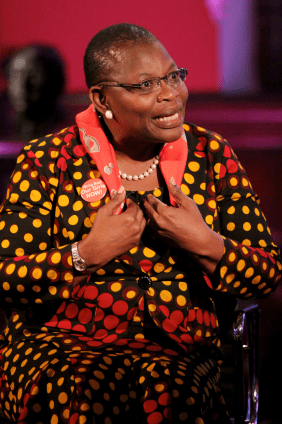
    Oby Ezekwesili

    On March 22, 2023, a Twitter user tweeted that Ezekwesili’s legacy as a Minister of Education under the Obasanjo era was the removal of History from ‘our Education.’

    In 2020, Ezekwesili claimed that History was long removed as a stand-alone subject in 1982 and merged with social studies as part of the basic education school curriculum. 

    CDD Election War Room has checked this claim and this is what we found.

    Claim: Did Oby Ezekwesili remove history from the Nigerian curriculum while she was the Minister of Education?

    Verification:

    Nigeria operated different systems of education through the colonial and post-colonial era. Up until 1954, Nigeria operated the 8-6-2-3 system– that is 8 years of primary, 6 years of secondary, 2 years for high school certificate, and three years of university. 

    Between 1954 to 1982, Nigeria switched to the 6-5-2-3 system. In all of these systems, History was taught as a basic education in primary and junior schools. 

    However, following the 1969 National Curriculum Conference and the 1980 World Bank directive for the restructuring of the school curriculum; following the non-viability of History as a course of study, Nigeria switched to the 6-3-3-4 system in 1982.

    This witnessed the removal of History as a subject in the Junior Secondary classes and replaced with Social Studies. However, History was still taught in senior secondary classes, as an optional subject. 

    In 2007, the Federal Government launched a new curriculum known as the New Basic Education Curriculum for primary and Junior Secondary Schools. History was removed from Primary and Junior Secondary Schools’ curricula and implemented in the 2009/2010 Academic Session. 

    Official reasons given for the removal then were, among others, that students shun the subject; only a few jobs were available for history graduates, and there is a dearth of history teachers. 

    However, the fact is that History, even though offered in Senior Secondary Schools, had long been removed from Primary and Secondary Schools’ curricula since 1982, with very few schools offering it. 

    In 2017, the Nigeria Education Research and Development Council (NERDC) announced it was set to reintroduce History as a subject in primary and junior secondary school curriculum, beginning from the 2018/2019 academic session.

    In 2022, The federal government initiated the first stage of a teacher training initiative to reintroduce History as a stand-alone subject in basic education curriculum. 

    Verdict:

    The claim that Oby Ezekwesili removed history from Nigeria’s curriculum is false. History was long removed as a stand-alone subject in 1982 when Nigeria embraced the 6-3-3-4 system. 

    In 2007 when the government officially announced History removal from basic education curriculum, it was not implemented until 2009/2010.

  • FACT CHECK: Will the US Kingpin Act affect Nigerians when Tinubu is sworn in?

    FACT CHECK: Will the US Kingpin Act affect Nigerians when Tinubu is sworn in?

    On March 27, 2023, a Twitter user tweeted a picture with the caption “If Bola Tinubu becomes President, the citizens of Nigeria are going to go through hell trying to access Western nations. Please, read the Kingpin act.  😭”

    Claim: Did Bola Tinubu, Nigeria’s President-elect, violate any part of the US Kingpin Act? Will the “Western Nations” sanction Nigeria if Tinubu is sworn-in as the President? 

    Verification: 

    The CDD Election War Room found that the image attached to the tweet is an excerpt from a blog, “NkirukaNistorian.” The article, which has gone viral is titled “SPECIAL REPORT: Implications of US’ Foreign Narcotics Kingpin Designation Act for Tinubu presidency.”

    We found that Bola Tinubu alongside K.O Tinubu and Alhaja Mogaji, forfeited $460,000 traced to their Heritage Bank account, in the United States.

    However, they were only indicted, not convicted for any drug-related dealings. 

    This finding can be corroborated by a letter sent by the American Consulate in Lagos in February 2003.

    The letter, received by Tafa Balogun, the then Inspector General of Police (IGP), showed that Bola Tinubu has “no criminal arrest records, wants or warrants” in the Federal Bureau of Investigation (FBI). 

    Similarly, the court affidavit of July 26, 1993, (section 2) shows that the fund was traced to Bola Tinubu, K.O Tinubu and Alhaja Mogaji’s account and was settled as a civil forfeiture case.

    The affidavit reads “there is probable cause to believe that funds in certain bank accounts controlled by Bola Tinubu were involved in financial transactions in violation of USC sections and represents proceeds of drug trafficking. Therefore, these funds are (therefore) forfeitable to the US.” 

    Also, we found that Bola Tinubu is a claimant to the bank account and not a defendant in the drug trafficking and money-laundering suit. 

    Furthermore, the CDD Election War Room discovered that the Foreign Narcotics Kingpin Designation Act is a US law that imposes sanctions on foreign individuals and entities involved in international narcotics trafficking. 

    However, the act states that “the application of the Kingpin Act to a foreign country is determined on a case-by-case basis and involves a complex assessment of various factors, including the nature and extent of the drug trafficking involved and the response of the country to drug-related issues.” 

    Verdict

    The claim that Tinubu was convicted of drug trafficking and would be affected by the US Kingpin sanction when he becomes president is false. Also, there is no evidence or precedence that “western nations” will mete out severe sanctions on Nigerians when Tinubu is sworn in as the president. 

  • FACT CHECK: Was Tinubu announced as a drug baron by different countries around the world?

    FACT CHECK: Was Tinubu announced as a drug baron by different countries around the world?

    A photo making the rounds on social media has claimed that different countries around the world have, in announcing Nigeria’s president-elect, Bola Ahmed Tinubu, referred to him as either a drug dealer, a drug lord, or a drug kingpin.

    The photo shows Tinubu and a visual representation of how Austria, Canada, and Poland had each referred to him after he was announced as Nigeria’s president-elect in the 2023 presidential election.

    Nigeria’s presidential election was held on February 25, 2023, where Bola Ahmed Tinubu of the All Progressive Congress emerged the winner. 

    Verification: The CDD Election War Room found no evidence to show that Canada had referred to Tinubu as a Drug kingpin.

    However, an Austrian newspaper did make a report about Tinubu on Tuesday, March 2, 2023. The report was in German, which is Austria’s national official language.

    Using Google Translate, we found out that the report did not refer to Tinubu as a Drug baron or dealer, as the image claimed, but rather, it stated that Tinubu has been linked to drug dealing in the past.

    “Oil billionaire Bola Tinubu, who has also been linked to drug trafficking in the past, won Nigeria’s presidential election” It read. 

    Furthermore, two Polish newspapers have also made a report following Tinubu’s announcement as the president-elect. Again, using google translate to translate the Polish report to English, the CDD Election War Room could not find anywhere where the newspaper had referred to Tinubu as a drug lord.

    One of the newspapers, TVN24 had reported thus: “Tinubu, who has wielded power from behind the scenes for much of his career, has been called the ‘Godfather’ of the Nigerian establishment. In the past, he financed the election campaigns of candidates for the highest offices in the country, including the outgoing President Buhari.”

    The newspaper had also gone ahead to state that Tinubu had served as governor of Lagos state where he made a huge fortune and that he’d been “repeatedly accused of corruption” which Tinubu “consistently denied.”

    The other newspaper has made a headline that states “Nigeria: The Godfather is President”. However, throughout the report, we found no place where Tinubu was referred to as a drug lord.

    Verdict: The claim that Bola Ahmed Tinubu has been announced as a drug baron, drug dealer, or drug lord by different countries is misleading. The CDD War Room found an Austrian newspaper that stated that he was linked to drug dealing in the past, and Polish newspapers described him as a Godfather. However, none of them referred to him as a drug kingpin or drug dealer. 

  • FACT CHECK: Can BVAS be pre-loaded before voting starts?

    FACT CHECK: Can BVAS be pre-loaded before voting starts?

    Ahead of the March 18 elections, a text circulating rapidly on WhatsApp, created the impression that the Bimodal Voter Accreditation System (BVAS) can be preloaded before voting starts on election day.

    The viral post urges the electorate to monitor the BVAS machine before the voting exercise begins as it claims that it has to be on a zero value when turned on.

    “This is BVAS Machine. Please inspect and ensure that the value is 00000.0000.00 before INEC officials begins the voting exercise for the day in your polling unit, if it’s not on that value, raise alarm. Please help spread this message, We must get it right this time,” the viral WhatsApp post read.

    Claim: Can BVAS be preloaded before the voting exercise starts?

    Verification

    The CDD Election War Room reviewed the claim and has not found any evidence supporting it. 

    BVAS is a technological innovation introduced in 2021. Since then, it has been celebrated for enhancing the transparency of the voting process and boosting public trust in recent elections.

    The CDD Election War Room has published an in-depth explainer on BVAS. Similarly, Civil Society Organisations (CSO) such as Enough is Enough (EiE) and Yiaga Africa have produced explainer videos demonstrating how the BVAS machine functions. None of these explainers stated that the BVAS machine can be preloaded.

    Further checks showed no mention of the BVAS machine needing to be at a certain value to function optimally.

    The Independent National Electoral Commission (INEC) recently conducted a mock exercise to test-run the devices ahead of the 2023 general elections. The exercise was monitored by CSOs and media organisations. The post-mock exercise reports did not state that the BVAS machine can be pre-loaded or rather needs to be on a certain value to function.

    VERDICT

    CDD Election War Room found the claim to be misleading. We found no credible source supporting the claim that BVAS can be preloaded before the voting exercise starts.